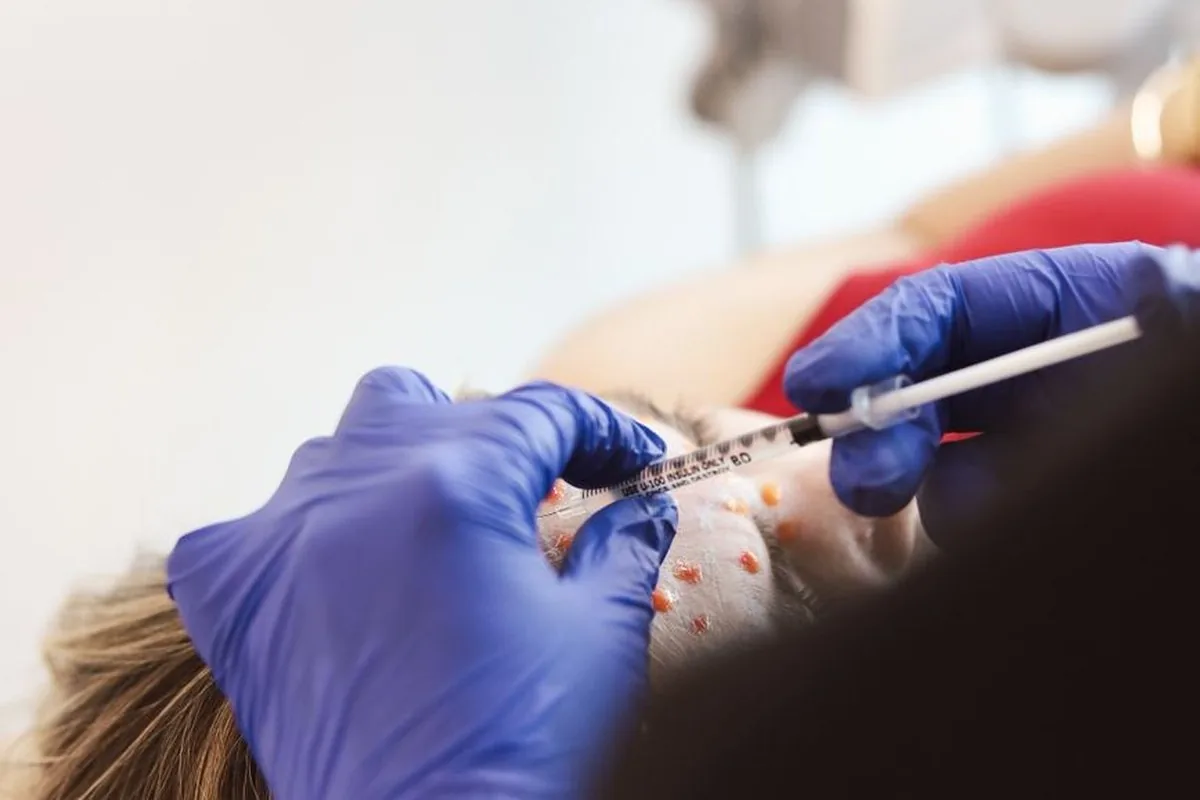
If you are looking into botox for face wrinkles, you probably have one or two lines that bother you: the “11” between your brows, the lines across your forehead, or crow’s feet when you smile. You may also have heard that Botox “lasts three to four months” and wondered what that means in real life.
This guide is written by BeauLife Clinic, an MOH-registered aesthetic clinic (KKLIU 1970/2019) operating since 2017. It goes area by area: which lines respond, the units, how the effect fades, why it fades faster for some people, side effects and yearly cost, using the approval trials and published studies. It does not replace a doctor’s assessment.
First, a dermatologist’s overview of what a Botox visit involves and when people usually start.
What to expect from Botox for wrinkles, explained by a dermatologist
1. Which face wrinkles can Botox treat?
Quick Answer: Botox treats lines caused by a muscle pulling on the skin. Four areas are approved in the US for BOTOX Cosmetic: frown lines, crow’s feet, forehead lines and neck bands. In the approval trials, each area beat placebo clearly at its main check-up. Our Botox treatment page covers the treatment itself and how a doctor plans the dose.
| Area | Muscle and movement | Label dose | Trial result with Botox | Placebo |
|---|---|---|---|---|
| Upper face (strongest evidence) | ||||
| Frown lines (“11” lines) | Corrugator and procerus, pull the brows together | 20 units over 5 points | 80% none or mild at day 30 | 3% |
| Forehead lines | Frontalis, lifts the brows | 20 units, given with 20 for frown lines | 46–61% improved by 2 grades at day 30 | 0–1% |
| Crow’s feet | Orbicularis oculi, closes the eye when you smile | 24 units (12 each side) | 20–26% improved by 2 grades at day 30 | 0–1.3% |
| Neck | ||||
| Neck bands (platysma) | Platysma, the thin neck muscle | 26, 31 or 36 units by number of bands | 31–32% minimal or mild and 2 grades better at day 14 | 0–2% |
Source: BOTOX Cosmetic US prescribing information (AbbVie, revised 10/2024), Tables 8, 11, 12 and 15. Endpoints differ by area: frown lines used “none or mild”; the other areas used stricter combined doctor-and-patient scores, so the rows are not directly comparable. Your dose is set after assessment.
Read the table with care. The crow’s feet and forehead trials needed a two-grade drop rated by both doctor and patient, a much harder bar than “none or mild”, so lower numbers there do not mean Botox works badly.
The table does show that botox for face wrinkles is most reliable on the upper face, where each line comes from one clear movement. Off-label areas, such as a gummy smile or a dimpled chin, use small doses and need more skill. Jaw and calf injections are not wrinkle treatments at all; our guides to jaw Botox for face slimming and Botox leg slimming cover them.
2. Which wrinkles does Botox not work on?
Quick Answer: Botox does little for lines that are there even when your face is still, folds from lost volume such as smile lines, crepey under-eye skin or sagging along the jaw. Those need filler, a skin booster or a tightening device. Our guide to face slimming and lifting options shows how these treatments differ.
| Line or concern | Why Botox falls short | What usually helps | Typical Klang Valley price |
|---|---|---|---|
| Smile lines (nose to mouth) | A fold from volume loss, not one muscle | Restylane dermal filler | About RM 1,200 – 3,500 per 1 ml syringe |
| Fine, crepey lines and dry skin | Skin quality, not movement | Profhilo skin booster | RM 2,000 – 4,500 per 2 ml syringe |
| Sagging jawline and jowls | Loose skin; relaxing muscle can make it worse | Thermage FLX skin tightening | RM 4,999 – 12,888 |
| Hollow or crepey under-eyes | Thin skin and volume loss | Jalupro Young Eye | Quoted after the doctor assesses your under-eyes |
A two-minute mirror check tells you which group your lines fall into before you book:
- Relax your face. Look straight into a mirror in good light with your face fully at rest, and note which lines you can still see.
- Move one area at a time. Frown, raise your eyebrows, then smile widely. Note which lines appear or deepen with each movement.
- Stretch the line. Gently spread a line apart with two fingers. A line that almost vanishes is mostly from movement; one that stays is etched in the skin.
- Look down. Tilt your chin down slightly. Lines and folds that only deepen now come from sagging or volume loss, not from a muscle.
- Take two photos. Photograph each area at rest and in motion, and bring them to your consultation so the doctor can see what bothers you.
Lines that show only with movement are the clearest Botox cases; deep resting lines respond more slowly.
3. How many units of Botox do you need per area?
Quick Answer: The US label uses 20 units for frown lines, 24 for crow’s feet, 40 for the forehead with frown lines, and 64 for all three upper-face areas. Asian patients often need less: a Japanese trial found 10 and 20 units both worked on frown lines. Our Botox page compares label and Asian doses in full.
Units decide how strong the result is and how long it lasts. In a placebo-controlled trial of 142 Japanese adults, 86.4% responded to 10 units and 88.6% to 20 units at week four, against 0% on placebo. The higher dose lasted longer, though.
When you plan botox for face wrinkles, ask three questions:
- Which product, and how many units per area? The BOTOX Cosmetic prescribing information says its units cannot be swapped for another toxin brand’s units.
- Is the dose set by your muscles? A strong frown usually needs more; a low brow needs less on the forehead.
- Is a review included? A small top-up at about two weeks is cheaper than a full repeat if one side moves more.
4. How long does Botox last on face wrinkles?
Quick Answer: The label says about three to four months for frown lines, but the effect fades gradually. In the approval trials, 74% had smooth frown lines by day 7 and 80% by day 30. That fell to 70% at day 60, 48% at day 90 and 25% at day 120, per the prescribing information.
| Time after injection | Doctor: frown lines none or mild | Patient: at least moderate improvement | Placebo (doctor rating) |
|---|---|---|---|
| Day 7 | 74% | 82% | 6% |
| (‘Day 30‘, ”) | 80% | 89% | 3% |
| Day 60 | 70% | 82% | 2% |
| Day 90 | 48% | 63% | 2% |
| Day 120 | 25% | 39% | 2% |
Source: BOTOX Cosmetic US prescribing information (AbbVie, revised 10/2024), Tables 8 and 9: two randomised trials, 405 people on 20 units, 132 on placebo, ratings at maximum frown.
So “three to four months” is an average. For about half of people, frown lines were back to moderate by month three, though 63% still felt improved at day 90.
What this means for planning:
- Days 3 to 7: the line softens; most of the effect is already there in a week.
- Days 14 to 30: the peak, and the right time for a review.
- Months 3 to 4: movement returns for most people; this is when many book again.
Repeats do not wear off faster. In a 64-week Japanese study of 363 people given up to five treatments, the duration did not change with repeated sessions. The label also notes that dosing more often than every three months has not been studied.
Not sure which of your lines Botox can help?
A BeauLife doctor can watch how your face moves, tell you which lines will respond and suggest the units for each area before anything starts.
See how Botox for wrinkles works at BeauLife5. Why does Botox wear off faster for some people?
Quick Answer: Dose, age, sex and line depth all change the result. In Japanese trials, 20 units lasted longer than 10 units. In the US frown-line trials, people under 65 and women responded more often than people over 65 and men. Lines visible at rest also improved less fully, per the prescribing information.
| Factor and study | Group A | Group B |
|---|---|---|
| Dose (Japanese frown-line studies) | ||
| Harii 2008, 142 adults | 10 units: about 7.9 weeks | 20 units: about 9.4 weeks |
| Kawashima 2009, 363 adults, up to 5 sessions | 10 units: about 14.8 weeks | 20 units: about 17.1 weeks |
| Age (US frown-line trials, doctor rating, day 30) | ||
| Responded to 20 units | Under 65: 83% (316 of 382) | 65 and over: 39% (9 of 23) |
| Sex (US frown-line trials, doctor rating, day 30) | ||
| Responded to 20 units | Women: 85% (of 334) | Men: 59% (of 71) |
| Lines at rest (moderate or severe before treatment) | ||
| Mild or none at rest by day 30 | Botox: 74% (119 of 161) | Placebo: 20% (10 of 49) |
Sources: Harii & Kawashima 2008, Aesthetic Plast Surg (PMID 18663516); Kawashima & Harii 2009, Int J Dermatol (PMID 19490208); BOTOX Cosmetic US prescribing information (revised 10/2024), Table 10 and Section 14.1. The two Japanese studies defined duration differently, so compare doses within a study, not across studies. Small groups (65 and over, men) make those rows less certain.
Each factor has a practical answer:
- Stronger muscles need more units. Men and people with a heavy frown often get a shorter result from a standard dose.
- Older skin has more etched lines. Botox stops the folding, but a line already in the skin may also need a skin booster such as Profhilo or filler.
- Deep resting lines soften over sessions. Three in four reached mild at rest within a month; the rest needed more time.
6. What are the side effects of Botox for each face area?
Quick Answer: Side effects are uncommon and usually mild, and they differ by area. In the approval trials, frown lines carried a 3% risk of a drooping eyelid, crow’s feet 1% eyelid swelling, and the forehead 9% headache and 2% brow droop. Most settle within weeks, per the prescribing information.
| Area and side effect | Share of treated people |
|---|---|
| Forehead: headache (placebo 5%) | 9% of 665 treated |
| Frown lines: drooping eyelid | 3% of 405 treated |
| Forehead: drooping eyelid | 2% of 665 treated |
| Forehead: drooping brow | 2% of 665 treated |
| Forehead: skin tightness | 2% of 665 treated |
| Frown lines: facial pain | 1% of 405 treated |
| Crow’s feet: eyelid swelling | 1% of 526 treated |
Source: BOTOX Cosmetic US prescribing information (AbbVie, revised 10/2024), Tables 5, 6 and 7, reactions reported by at least 1% of treated people and more often than with placebo. Bar scale: 0 to 10%.
The eyelid and brow risks are why placement matters more than price. Injecting too low over the brow, or too close to the eye, can let the toxin reach the muscle that lifts the lid.
Skip treatment if you are pregnant or breastfeeding, or have a skin infection at the site or a nerve-muscle condition such as myasthenia gravis. Seek urgent help for any trouble swallowing, speaking or breathing.
Want your units and yearly cost before you decide?
WhatsApp +6016-251 7687 and a BeauLife doctor can check your lines, explain the dose per area and give you a written quote.
Ask a doctor about Botox for your lines7. How much does Botox for face wrinkles cost in a year?
Quick Answer: One area typically costs about RM 400 to 1,500 per session in the Klang Valley, two areas RM 800 to 3,000, and all three upper-face areas RM 1,280 to 4,800. Because most people repeat two to four times a year, the yearly cost matters more than one visit. BeauLife gives an exact quote after a consultation.
| Plan | Units (label dose) | Per session | Illustrative yearly cost (2–4 sessions) |
|---|---|---|---|
| One area, e.g. frown lines | About 20 | RM 400 – 1,500 | RM 800 – 6,000 |
| Two areas, e.g. forehead + frown lines | About 40 | RM 800 – 3,000 | RM 1,600 – 12,000 |
| Three areas: forehead, frown lines, crow’s feet | About 64 | RM 1,280 – 4,800 | RM 2,560 – 19,200 |
Per-session figures are Klang Valley market ranges from our Botox for wrinkles page; yearly figures are simple multiples, not a BeauLife package. Three things keep the yearly cost down:
- Treat the lines that bother you. One well-dosed area often looks better than three thin ones.
- Re-book when movement returns, not on a fixed calendar.
- Use the review visit. A small top-up at two weeks is cheaper than repeating early.
8. How to choose a doctor for Botox in Malaysia
Quick Answer: Choose an MOH-registered clinic where a doctor with a Letter of Credentialing and Privileging (LCP) for aesthetic practice assesses and injects you. Botox is on the list of procedures that need an MOH-qualified doctor (Malay Mail, 2025). Our guide to choosing an aesthetic clinic in Malaysia shows how to check registration.
At a good consultation for botox for face wrinkles, the doctor will:
- Watch you frown, raise your brows and smile, rather than inject by a standard map.
- Tell you which lines Botox will not fix, and what would help those instead.
- Name the product and units per area, and show you the sealed box if you ask.
BeauLife has LCP-certified doctors at five Klang Valley branches: Bukit Jalil, Cheras, Puchong, Subang Jaya and Ampang.
9. The short version
Botox for face wrinkles works on lines made by movement, not on volume folds or sagging. Label doses run from 20 units for frown lines to 64 for the whole upper face, and Asian faces often need less. The effect peaks at about a month and fades from month three. Higher doses last longer; older skin, men and deep resting lines respond less fully. Ask for units per area and plan the yearly cost.
10. Frequently Asked Questions
1. Which wrinkles does Botox work on?
Botox works on lines made by movement: frown lines between the brows, horizontal forehead lines, crow’s feet and neck bands. It does little for smile lines, crepey skin or sagging, which need filler, a skin booster or a tightening device.
2. How many units of Botox do I need for my forehead?
The US label uses 20 units for forehead lines, given with 20 units for frown lines. Asian patients often need fewer, set after the doctor watches your brows move.
3. How long does Botox last on wrinkles?
About three to four months on average. In the approval trials, 80% had smooth frown lines at day 30, 48% at day 90 and 25% at day 120. Higher doses tend to last longer.
4. Does Botox wear off faster each time?
No. A 64-week Japanese study of up to five treatments found the duration did not change with repeat sessions. Dose, muscle strength and age matter more.
5. How much does Botox for wrinkles cost in KL?
One area typically costs about RM 400 to 1,500 per session in the Klang Valley, and three upper-face areas about RM 1,280 to 4,800. BeauLife gives an exact quote after a consultation.
Thinking about Botox for your lines?
WhatsApp us on +6016-251 7687. A BeauLife doctor will check which of your lines Botox can soften, explain the units for each area and give you a written quote before anything starts. We open 10am–7pm on weekdays and 10am–5pm on weekends.
Book a Botox consultation