

Most people find Linerase looking for a way to improve thin, tired-looking skin without changing the shape of the face. That is what it is built for.
This page explains Linerase collagen injection treatment in Kuala Lumpur in plain terms. It covers what Linerase is made from, the halal and allergy questions, what the research shows, who it suits and which areas it treats. It also covers prices, the session, results, risks and how Linerase compares with skin boosters and Deusaderm.
Not sure if your skin needs collagen, hydration or volume?
To start, this two-minute video from the maker shows what Linerase is and how it is prepared.
Source video: Linerase (official channel) on YouTube


Clinical photos published by the brand, not BeauLife Clinic patients. Individual results vary.
Quick Answer: Linerase is a sterile powder of 100 mg micronised type I collagen, made in Italy and sold as a Class III medical device. The doctor mixes it with saline and injects it into the skin. The maker says the collagen breaks down into small fragments that signal skin cells to repair the dermis and make new collagen.
According to the official Linerase FAQ, each vial is mixed with 5 ml of saline to make a thin suspension of 20 mg per ml. Three points set it apart:

Linerase is sometimes called atelocollagen in research papers. The maker, the Italian company CSD, prefers “micronised heterologous type I collagen”. The doctor at our aesthetic clinic in Kuala Lumpur can show you the product box and explain what is inside.
Quick Answer: Linerase is made from equine (horse) type I collagen, as the maker’s own video description states. Equine collagen is used partly because bovine and pork collagen raise disease-transmission, immune and religious concerns. Linerase is not pork-based, but the maker’s website does not mention halal certification.
A 2020 review of equine collagen in medicine explains this choice. For patients, the source raises three practical questions:
By contrast, Sunmax Deusaderm collagen is pork-derived, so check the source of any collagen product before you book.
Quick Answer: Linerase has small, early studies rather than large trials. In 30 people with acne scars, four sessions gave a 6.8 out of 10 improvement rating from doctors at three months, holding to 12 months. Gum studies and lab work also show tissue repair. No randomised trial of Linerase for facial ageing has been published.
| What was studied | Patients | Schedule | Main finding | Source |
|---|---|---|---|---|
| Heterologous type I collagen under atrophic acne scars (no control group) | 30 | 4 sessions, 2 weeks apart; followed to 12 months | At 3 months, doctors rated improvement 6.8/10 and patients 7.2/10. The gain held to 12 months. No major side effects. | Gkouvi et al., 2025 |
| Linerase 100 mg injected into thin gums | 18 | 2–3 injections, 2 weeks apart | Thicker gum tissue and less recession. | Wyganowska-Swiatkowska et al., 2020 |
| Linerase 100 mg in gums of people with Hashimoto’s disease | 17 | 4 injections, 2 weeks apart | Gum bleeding stopped by the end of the course. | Klewin-Steinböck & Wyganowska, 2023 |
| Micronised equine type I collagen on fibroblasts in the lab | Cell study | Single exposure | Cells made more type I and III collagen. | Lombardi et al., 2020 |
| Different product: bovine collagen plus Botox vs Botox alone, randomised | 40 | One treatment; followed to 6 months | “Markedly effective” in 90% vs 40% for crow’s feet; 95% vs 20% very satisfied. | Liu & Wang, 2025 |
Source: PubMed. The first four rows appear on the maker’s own study list; the last row tested a different collagen product.
Read these with care: the acne scar study had no control group, the gum studies treated mouths and the lab study used mouse cells. The only randomised trial tested a different collagen. The maker lists its work on its clinical studies page. For a booster with more trials, see Rejuran Healer.
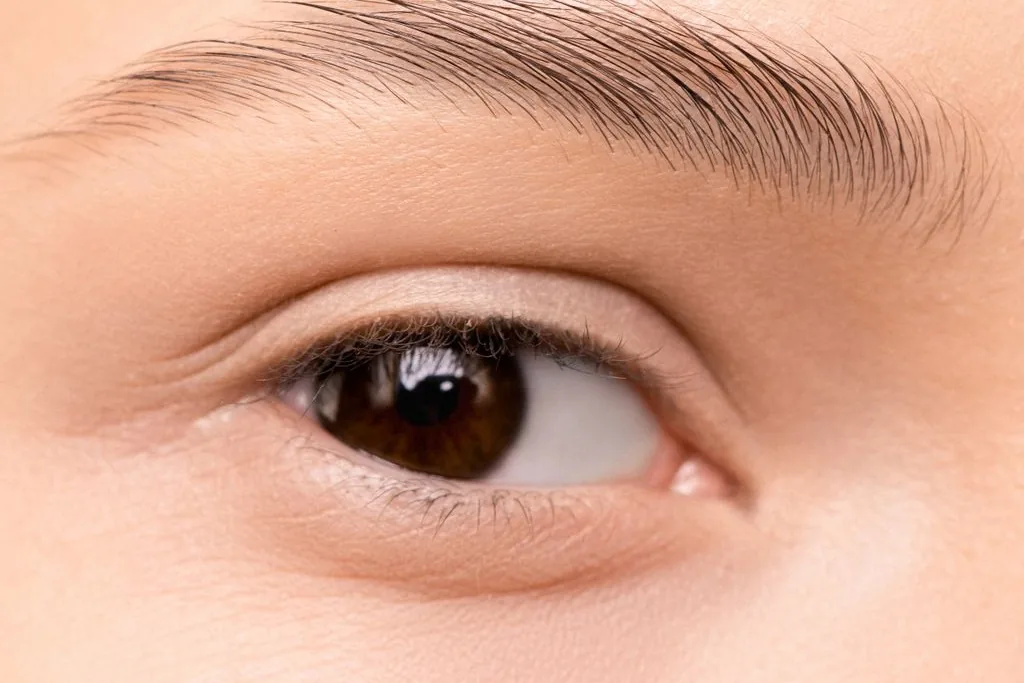
Quick Answer: Linerase usually suits adults with early skin laxity, crepey or thin skin, fine lines, or shallow acne scars, who want firmer, smoother skin without added volume. The maker says one vial can treat the face, neck, décolletage and hands, and it can also be used around the eyes and lips.
| Area | What it can help | Limit |
|---|---|---|
| Under the eyes | Crepey skin and fine lines | No help for deep hollows or eye bags |
| Lips and around the mouth | Fine vertical lines, dry texture | Does not plump the lips |
| Neck | Crepey skin and early laxity | Not for neck bands |
| Décolletage | Thin, sun-damaged skin | Results are gradual |
| Back of the hands | Thin, crinkly skin | Does not replace lost volume |
It is a poor fit for deep folds, sagging jowls or hollow cheeks. For dark circles and thin under-eye skin, Jalupro Young Eye is another route; for hollow cheeks, a filler or collagen stimulator such as Sculptra fits better.
Quick Answer: Linerase collagen injection treatment in Kuala Lumpur typically costs RM 1,500 to 3,500 per session in the Klang Valley, with a few listings from about RM 800. The maker’s four-session course therefore works out at roughly RM 6,000 to 14,000. Your exact quote is given after the consultation.
| Treatment | Market range (bar = starting price) | Note | |
|---|---|---|---|
| Linerase, one session (face) | RM 1,500 – 3,500 | Most Klang Valley listings; a few start from about RM 800 | |
| Linerase, 4-session course (illustrative) | RM 6,000 – 14,000 | Maker protocol: 4 sessions, 14 days apart | |
| Linerase, maintenance in year one (illustrative) | RM 4,500 – 10,500 | About 3 more sessions, one every 2 months | |
| For context: Profhilo, one session | RM 2,000 – 4,500 | HA booster, per 2 ml | |
| For context: Restylane Vital, one syringe | RM 1,100 – 1,800 | HA booster, per 1 ml | |
| For context: Sunmax Deusaderm, one syringe | RM 3,500 – 4,000 | Porcine collagen for under-eyes | |
Compiled from publicly listed Klang Valley clinic prices, 2025–2026. Course and maintenance rows multiply the session range and are illustrative. Not BeauLife’s price list; your exact quote is given after the consultation.
These are market ranges, not BeauLife’s price list. A session can cover one area or several, so ask:
Want a clear price for your skin, not a guess?
Quick Answer: A Linerase session usually takes 30 to 45 minutes, including numbing. The doctor mixes the collagen powder with saline and places tiny amounts into the skin with a very fine needle, about 0.1 ml per point. Most people feel brief stinging and have small bumps that settle within a day or two.
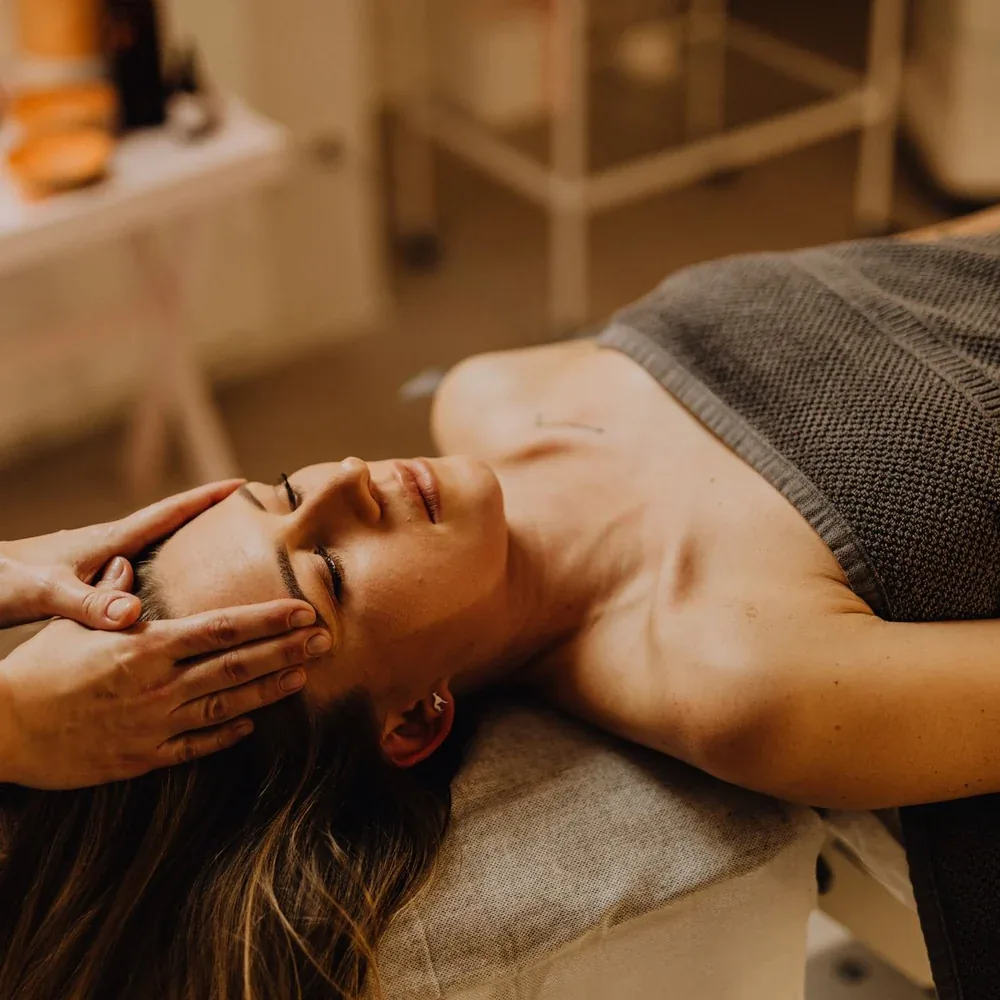
Per the maker’s instructions, it is not combined in one sitting with peels, lasers or dermabrasion. If you also want Botox for crow’s feet, the doctor will plan the timing.
Quick Answer: The maker says Linerase starts working about 72 hours after a session and peaks at around two weeks, when the next session is due. Results build over the four-session course. In the acne scar study, improvement was clear at three months and still holding at 12 months, with maintenance every two months advised.
| Time after first session | What usually happens (bar = relative visible change) |
|---|---|
| Day 0 | Small bumps, redness and mild swelling at each injection point. Bumps usually flatten within 24–48 hours. |
| Day 3 | The maker says the collagen starts to act from about 72 hours. |
| Week 2 | Peak effect of one session, per the maker. Session 2 is due now. |
| Week 6 | Session 4, the last of the first course. |
| Month 3 | In the acne scar study, improvement was clear at this point. |
| Month 4 onwards | Maintenance: one session every two months, per the maker’s protocol. |
| Month 12 | In the acne scar study, the improvement was still holding. |
Sources: Linerase FAQ (maker protocol) and Gkouvi et al., 2025 (PubMed 40771444). Typical findings, not promises; results vary.
Results build slowly, and sun and smoking shorten them. Some websites say one course lasts a year, but the maker’s own protocol adds a session every two months. The Juvelook collagen booster builds in a similar way.
Quick Answer: Choose by the main problem. Linerase suits thin, crepey or slack skin that needs firmness, and adds no volume. HA skin boosters such as Profhilo mainly hydrate. Sunmax Deusaderm is a porcine collagen gel that fills fine hollows, mostly under the eyes. Each has a different animal source and course.
| Feature | Linerase | HA skin booster | Sunmax Deusaderm |
|---|---|---|---|
| What it is | Pure type I collagen powder from horses, mixed with saline | Hyaluronic acid gel (e.g. Profhilo, Restylane Vital) | Porcine type I collagen gel in a syringe |
| Main job | Skin quality: thin, crepey, slack skin | Hydration and glow | Fill fine hollows, mainly under the eyes |
| Adds volume? | No | Very little | A little, right away |
| Usual course | 4 sessions, 2 weeks apart, then every 2 months | 2–3 sessions, 4 weeks apart | Often 1–2 sessions |
| Animal source | Equine (horse) | None (made by bacteria) | Porcine (pig) |
| Typical Klang Valley market range | RM 1,500 – 3,500 per session | RM 1,100 – 4,500 per session | RM 3,500 – 4,000 per syringe |
Sources: maker information and listed Klang Valley prices, 2025–2026. Market ranges, not BeauLife’s price list.
For dehydrated, dull skin, Profhilo skin booster treatment is the usual first step; for hollows under the eyes, see Deusaderm collagen. A newer option for thin skin is the RE2O skin booster.
Quick Answer: Linerase is generally well tolerated. Redness, swelling, itching, small bumps and bruising usually settle within a week. The maker’s FAQ also lists rare abscesses, granulomas, allergic reactions and skin necrosis in the frown area. It should only be injected by a trained doctor.
The maker’s FAQ says Linerase should not be used if you:
In Malaysia, medical devices fall under the Medical Device Authority, which uses a hologram security label on registered devices, and medicines under the National Pharmaceutical Regulatory Agency. Ask the clinic to show the sealed Linerase vial and its registration before treatment. The same checks apply to Rejuran and other injectables.
Want to know if Linerase suits your skin?
Quick Answer: BeauLife offers Linerase collagen injection treatment in Kuala Lumpur at an MOH-registered clinic (KKLIU 1970/2019) operating since 2017, where LCP-certified doctors perform every injectable treatment. The doctor explains the collagen source, the evidence and the risks, and gives the full course price before you start, at five Klang Valley branches.

Branch addresses and maps are on our contact and branch locations page. You can also read more about BeauLife’s doctors and approach.

Linerase makes sense if your skin has become thin, crepey or slightly slack, and you want firmer, smoother skin without added volume. It is a horse-derived collagen, given as a four-session course with maintenance, and its evidence is encouraging but small. Choose a doctor who explains the source, the course, the risks and the full price before the first injection.
Linerase typically costs RM 1,500 to 3,500 per session in the Klang Valley, with a few listings from about RM 800. The maker’s course is four sessions, so plan for the full course. These are market ranges, not BeauLife’s price list; your exact quote is given after the consultation.
No. Linerase is a collagen injection that aims to improve skin quality, firmness and elasticity. It does not add volume or reshape the face, so lost volume needs a filler or collagen stimulator instead.
The maker’s protocol is four sessions, 14 days apart, followed by one maintenance session every two months. Your doctor may adjust this to your skin and the area treated.
Linerase is made from horse (equine) collagen, not pork. The maker’s website does not mention halal certification, so Muslim patients may wish to ask their own religious adviser before treatment.
Yes. The maker says it can be injected into the skin around the eyes and lips to improve texture without adding volume. It does not fill deep hollows or plump the lips.
Book your Linerase consultation
A BeauLife doctor will assess your skin, answer your questions about Linerase and its risks, and give you a clear plan and course price before anything starts.
