

Most radiofrequency lifts heat one main layer of skin. XERF was built to reach several at once. It is so new that few Malaysian pages explain it clearly or say what it costs.
This page explains XERF skin lifting treatment in Kuala Lumpur in plain terms: how it works, the first studies, who it suits, pricing and how it compares with Thermage, DENSITY and Ultherapy Prime. It also covers how to check that a XERF device is genuine and registered, which matters more for a device this new.
New device, same first question: who is treating you?
To start, this short clip from the manufacturer shows the idea behind XERF: energy delivered deep in the skin, where tightening begins.
Source video: Cynosure Lutronic (official channel) on YouTube

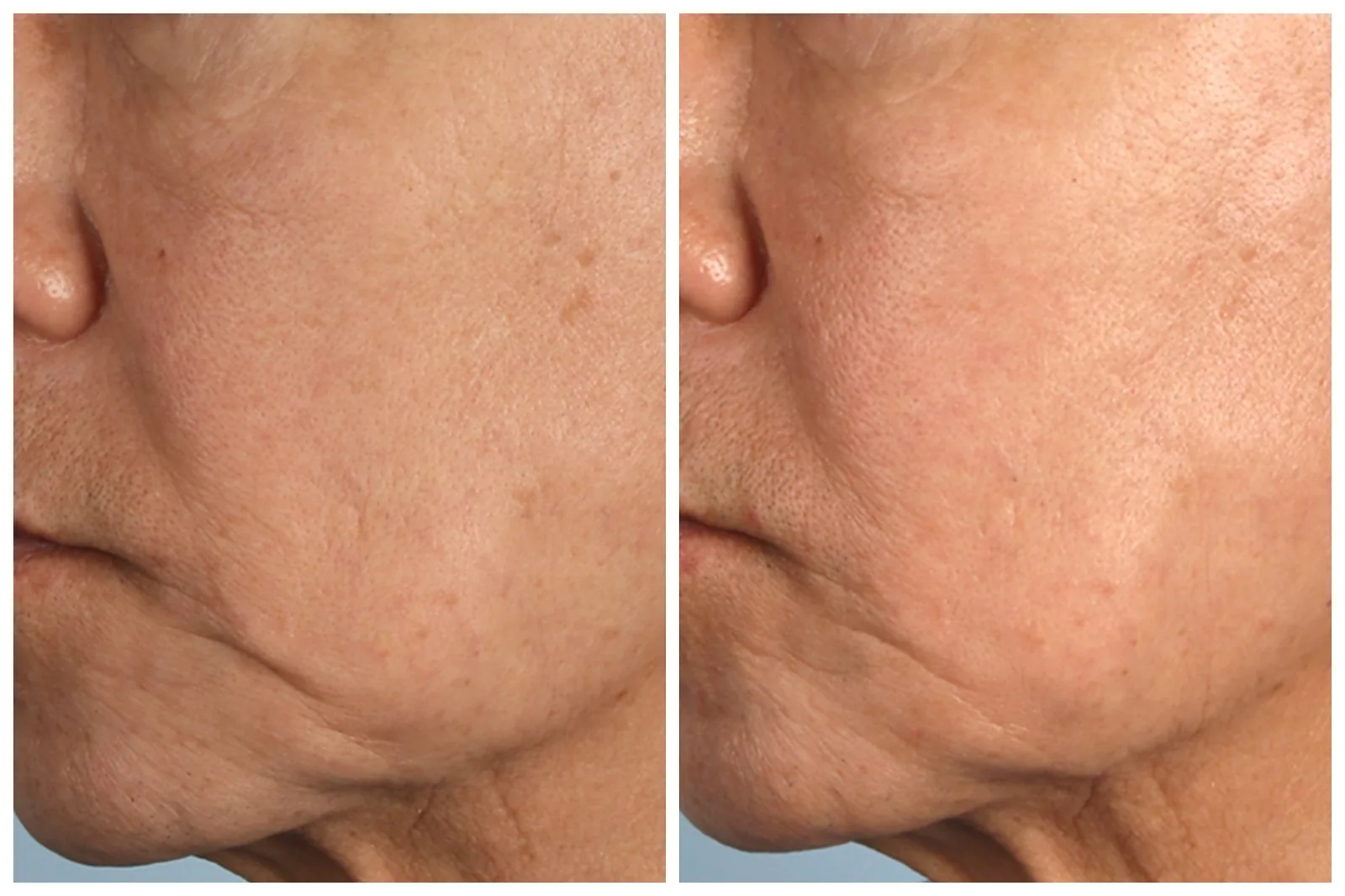
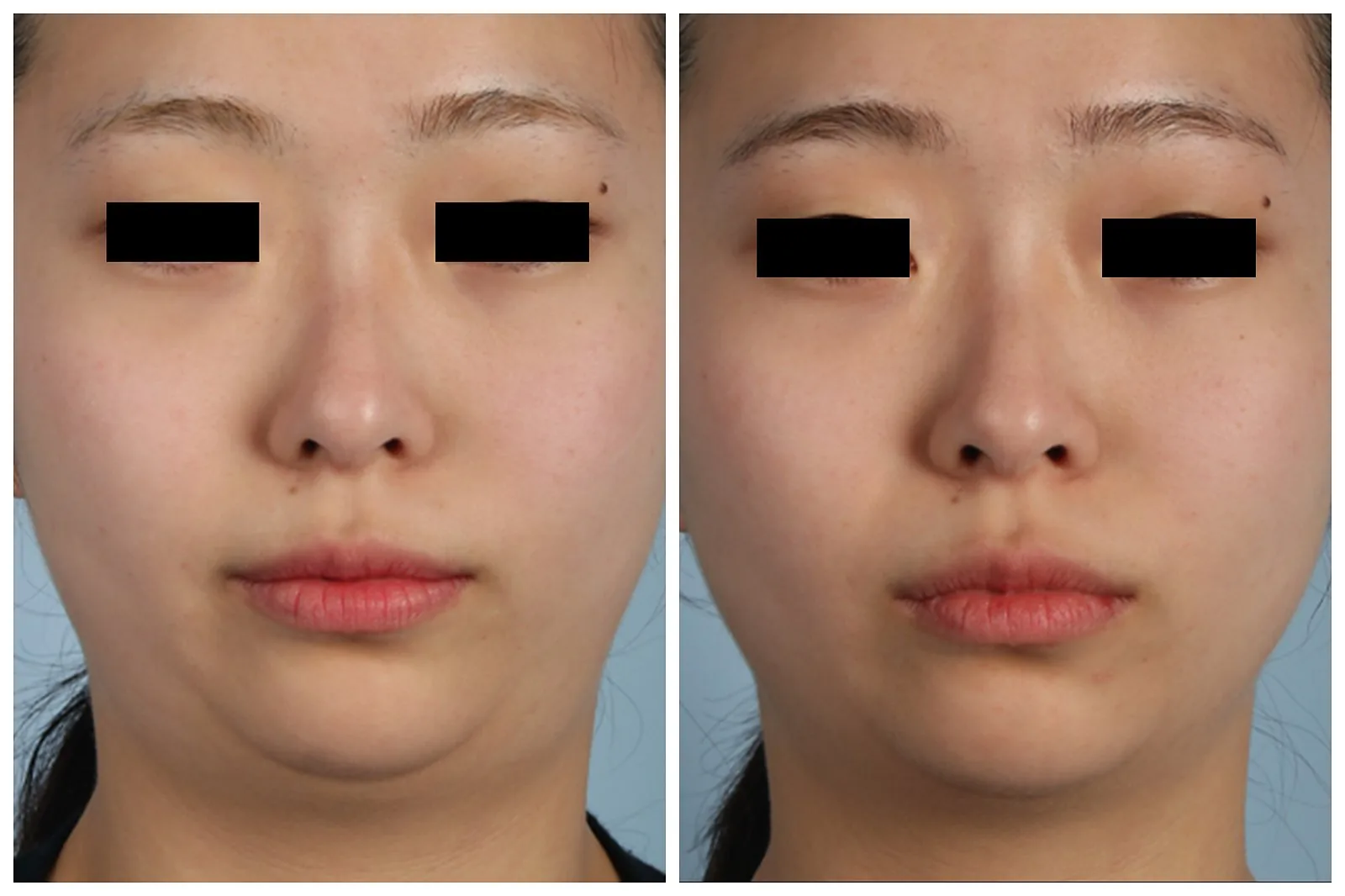
Clinical photos supplied by the manufacturer, not BeauLife Clinic patients. Individual results vary.
Quick Answer: XERF is a non-invasive monopolar radiofrequency (RF) device made by Cynosure Lutronic in Korea. Each pulse combines a 6.78 MHz frequency, which heats the dermis and fibrous bands, with a 2 MHz frequency, which reaches deeper tissue. The heat tightens collagen and starts new collagen and elastin, so skin looks firmer over months.
The maker describes XERF as the first skin tightening treatment to combine two RF frequencies in a single shot. A 2025 modelling and tissue study found the two frequencies together caused the strongest remodelling where skin meets the fat layer, without killing fat cells. Three features shape the treatment:
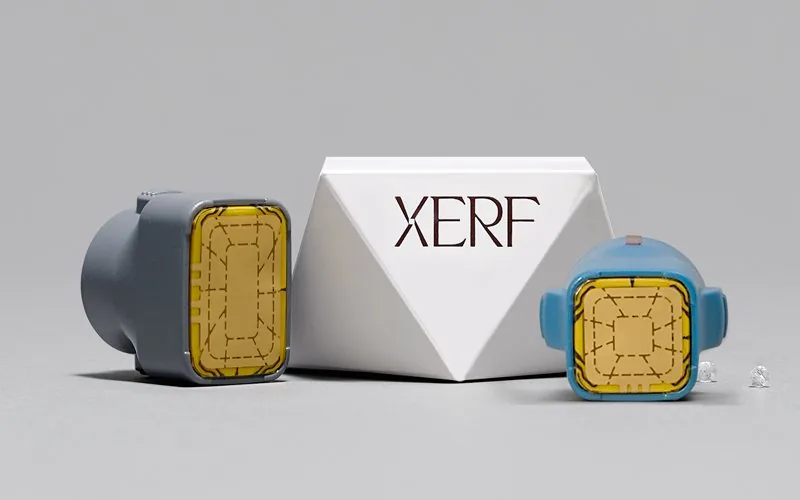
XERF works on the same principle as Thermage FLX skin tightening but adds the second frequency and depth control. It lifts and firms; it does not add volume or relax muscles. At BeauLife, an LCP-certified doctor chooses the settings for your face.
Quick Answer: The first studies are positive but small and short. In a 2026 US multicentre study of 39 adults given two sessions, 92.3% were rated improved at 90 days and 84.6% were satisfied, per Weiss et al. (2026). No long-lasting side effects were reported. The table sets out the key figures.
| Measure | Result | Study |
|---|---|---|
| Improved on the clinician-rated GAIS scale, day 30 | 84.6% (33 of 39) | Weiss et al., 2026 |
| Improved on the clinician-rated GAIS scale, day 90 | 92.3% (36 of 39) | Weiss et al., 2026 |
| Patient satisfaction 4 or more out of 6, day 30 | 79.5% (31 of 39) | Weiss et al., 2026 |
| Patient satisfaction 4 or more out of 6, day 90 | 84.6% (33 of 39) | Weiss et al., 2026 |
| Long-lasting side effects reported | 0 of 39 | Weiss et al., 2026 |
| Brow and upper-eyelid position after one session, months 1–3 | Progressive lift measured on 3D imaging (n = 16 women) | Erlich et al., 2026 |
Source: Cureus 2026;18(3):e104546 and Lasers Med Sci 2026;41(1):194, via PubMed. Both studies are small and short-term; the device maker supplied devices, a research grant or trainer fees.
Read these numbers with care: both studies are small, uncontrolled and three months long, and the maker supported each one. The study behind the US figures is registered as trial NCT07585591. Laboratory work, such as a 2024 histology study, supports the collagen effect but cannot predict your result.
Quick Answer: XERF usually suits adults with early to moderate skin laxity of the midface, jowls, jawline, under-chin or neck, who want a needle-free lift with little downtime. The US study treated facial, submental and neck laxity. Heavy sagging, deep hollows or a large amount of loose skin usually need a different approach.

Your doctor confirms suitability at the consultation. XERF is often a reasonable fit if you have:
It is less suitable if your main concern is lost volume, where a filler such as Restylane may help more. For heavier brow or jowl sagging, Ultherapy Prime skin lifting reaches the SMAS layer under imaging. Doctors usually postpone XERF during pregnancy, with active skin infection or with some implanted electronic devices.
Quick Answer: No Klang Valley clinic had published a XERF price at the time of writing, so XERF skin lifting treatment in Kuala Lumpur is quoted after assessment. For context, comparable devices typically cost from about RM 2,000 to over RM 12,000 per session in the Klang Valley. The bar table shows where they sit.
| Device | Entry price (bar) | Typical range | What moves the price |
|---|---|---|---|
| XERF | RM 4,888 – 9,888 | Areas, depth settings, pulses and number of sessions | |
| DENSITY | RM 1,888 | Shot count, tips and areas | |
| Thermage FLX | RM 4,999 – 12,888 | Eyes lowest; 900 REP face + neck highest | |
| Ultherapy Prime | RM 4,888 – 12,888 | Brow lowest; full face + neck highest |
Source: publicly listed Klang Valley clinic prices, 2025–2026. Market ranges, not BeauLife’s price list.
These are market ranges, not BeauLife’s price list. Like other RF devices, the cost of XERF depends on how much treatment you need, so the price only means something once you know what it covers. When you get a quote, ask:
Want a XERF quote based on your own face?
Quick Answer: A XERF session usually takes under an hour, depending on the areas. After cleansing and marking, the doctor passes the tip over each zone at shallow, middle or deep settings, with cooling built into every pulse. No numbing is usually needed, and most people go straight back to normal activities afterwards.
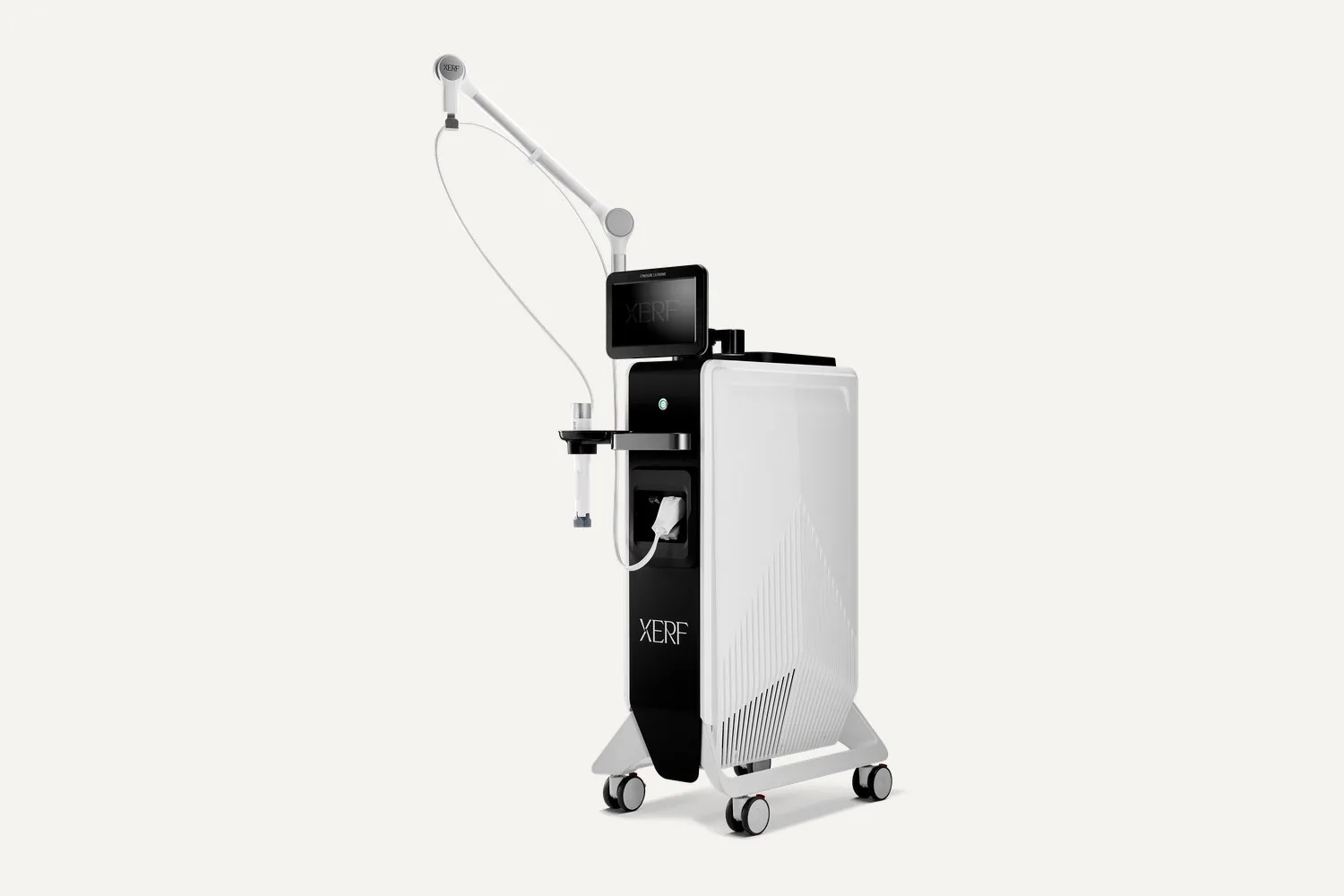
The US multicentre study allowed up to three sessions four weeks apart, though every patient finished after two. The Israeli study gave one session and reported only mild, short-lived side effects.
Quick Answer: Some tightening may show straight away, but the main change builds over the following weeks as collagen remodels. In the 2026 US study, 84.6% were rated improved at 30 days and 92.3% at 90 days, per Weiss et al.. The timeline below shows the usual stages.
| Time after treatment | What typically happens (bar = relative visible change) |
|---|---|
| Day of treatment | Warmth during each pulse; the maker reports immediate tightening, and any redness usually settles within hours |
| Week 4 | Second session in the US study protocol; 84.6% already rated improved at day 30 |
| Month 3 | 92.3% rated improved at day 90; brow and eyelid position still rising in the single-session study |
| Beyond month 3 | No published XERF follow-up yet; results are often described as lasting around a year, then soften with ageing |
Source: Cynosure Lutronic XERF patient information, Weiss et al., 2026 and Erlich et al., 2026. Individual results vary.
Plan XERF a few months before an event. Results are often described as lasting a year or more, but published follow-up stops at three months. In the single-session study, brow and upper-eyelid position kept improving between months one and three.
Quick Answer: All four aim to tighten or lift skin without surgery. XERF, Thermage and DENSITY use radiofrequency; Ultherapy Prime uses imaging-guided ultrasound. XERF’s difference is two frequencies and three depth settings in one device. In US FDA bench testing, its heating and cooling matched Thermage FLX. The table compares them factually.
| Feature | XERF | Thermage FLX | DENSITY | Ultherapy Prime |
|---|---|---|---|---|
| Energy | Monopolar RF at two frequencies (6.78 MHz + 2 MHz) in one pulse | Monopolar RF | Monopolar + bipolar RF in one shot | Microfocused ultrasound with imaging |
| Maker | Cynosure Lutronic (Korea) | Solta Medical (USA) | Jeisys (Korea) | Merz Aesthetics (Germany) |
| Depth control | Shallow, middle and deep settings | Set by tip; broad dermal heating | Deep and upper dermis together | Fixed depths down to the SMAS layer |
| Comfort | Built-in cryogen cooling; no numbing in studies | Heat with cooling; varies by person | Contact cooling; no anaesthesia in published cases | Heat and tingling along each line |
| Research record | Newest; human studies from 2026, follow-up to 3 months | Longest; studies since 2003 | Small studies from 2025–2026 | Large body of studies since 2009 |
| Typical market range | RM 4,888 – 9,888 | RM 4,999 – 12,888 | RM 1,888 | RM 4,888 – 12,888 |
Source: manufacturer information, US FDA records, published studies and publicly listed Klang Valley clinic prices, 2025–2026. Market ranges, not BeauLife’s price list.
That FDA point needs context. The FDA cleared XERF in August 2025 as an electrosurgical device for dermatologic procedures, using Thermage as its comparison device, and no clinical tests were part of that submission. Thermage FLX has the longest research record, DENSITY radiofrequency tightening is the lower-cost dual-mode option, and Ultherapy Prime shows deeper layers on screen.
Quick Answer: XERF launched in Korea in May 2024 and the maker reports more than 2,000 units installed worldwide. In studies so far it has been well tolerated, with mild, short-lived redness or warmth. Because it is new to Malaysia, ask to see the device and its Malaysian medical device registration before treatment.
A June 2026 manufacturer update named Korea, Hong Kong, Thailand, Vietnam, Singapore, the Philippines and Australia among its Asia-Pacific markets. With any new device, the risks to watch are:
Medical devices sold in Malaysia must be registered with the Medical Device Authority. In August 2026 the Ministry of Health announced a hologram security label for registered medical devices, rolling out in phases. Our aesthetic clinic in Kuala Lumpur page explains how to check a clinic’s own licence.
Ready to find out if XERF suits you?
Quick Answer: BeauLife provides XERF skin lifting treatment in Kuala Lumpur at an MOH-registered clinic (KKLIU 1970/2019) operating since 2017, with LCP-certified doctors performing every device treatment. You can see the device before treatment, your quote states the areas and sessions, and you can book at any of five Klang Valley branches.

Branch addresses and maps are on our contact and branch locations page. You can also read more about BeauLife’s doctors and approach.

XERF skin lifting treatment in Kuala Lumpur is a sensible option for early to moderate laxity of the midface, jawline or neck. It suits people who want a comfortable, needle-free treatment with little downtime. It is not a facelift, the research is still short-term, and results soften over time. Check the device and its registration, compare quotes by areas and sessions, then let a doctor confirm whether XERF or another lifting treatment suits you better.
XERF skin lifting treatment typically costs RM 4,888 to RM 9,888 per session. Your XERF quote depends on the areas, settings and number of sessions, and is given after your assessment.
Most people feel short bursts of warmth. Built-in cryogen cooling protects the skin surface, and the published studies used no numbing cream. Tell your doctor if a pulse feels too hot; the intensity can be lowered.
It depends on your skin. The US multicentre study gave two sessions four weeks apart, while an Israeli study used a single session. Your doctor will suggest a plan after assessing your laxity.
Usually very little. Mild redness or warmth may last a few hours. In the 2026 US study, no long-lasting side effects were reported. Most people return to work the same day.
Neither is better for everyone. XERF adds a second, lower frequency and three depth settings; Thermage FLX has a far longer research record. In US FDA bench testing, XERF’s heating and cooling behaviour was found equivalent to Thermage FLX. Your doctor matches the device to your skin.
XERF launched in Korea in May 2024 and is now used across several Asia-Pacific markets. Because it is new to the region, ask any clinic to show you the device and confirm its Malaysian medical device registration before treatment.
Book your XERF consultation
A BeauLife doctor will assess your skin, explain whether XERF skin lifting treatment in Kuala Lumpur suits you and its risks, and give you a clear price before anything starts.
