Search for co2 laser treatment for scars and you will find two loud camps. One says it is the gold standard. The other warns it leaves Asian skin patchy. Both are partly right, and neither helps you decide.
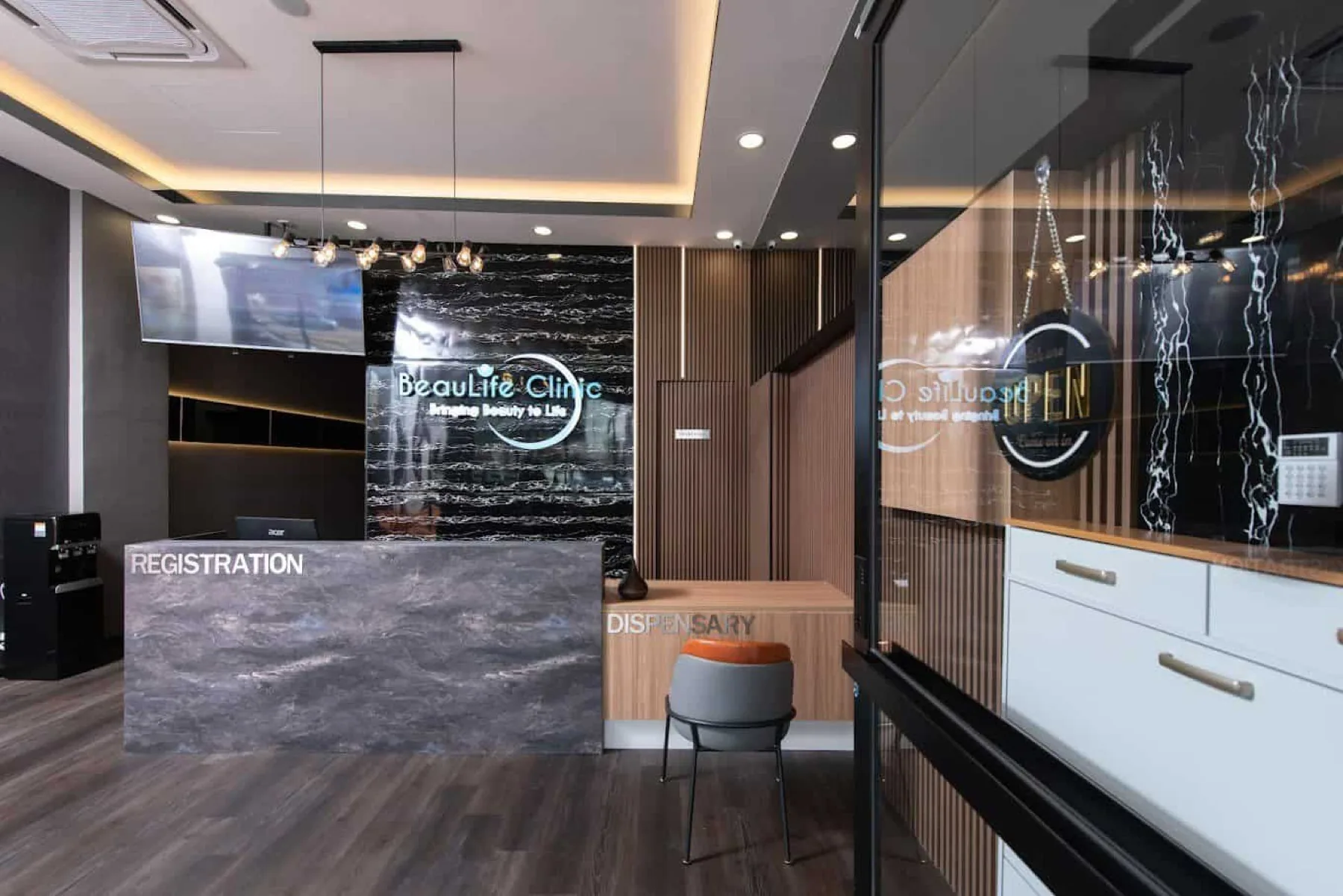
This guide is a comparison, not a sales page. BeauLife Clinic, an MOH-registered clinic (KKLIU 1970/2019) running since 2017, does not offer CO2 laser. So we have nothing to sell you on it. We do treat scars with other methods, such as Potenza RF microneedling, and we explain where those fit and where they fall short.
Below you will find what CO2 laser does, what trials on Asian skin found, which scars it is studied for, and how its downtime and cost compare. First, dermatologist Dr Davin Lim compares RF microneedling with lasers for acne scars.
Is RF Microneedling better than Laser? | Dr Davin Lim
1. What does co2 laser treatment for scars actually do?
Quick Answer: A fractional CO2 laser burns thousands of tiny columns into the skin, removing a little scar tissue in each. As the columns heal, the skin makes new collagen, so dents look shallower and edges blend in. It improves scars but does not erase them; the American Academy of Dermatology says laser replaces a scar with a less noticeable one.
CO2 is an ablative laser: it removes skin, not just heats it. Older full-face CO2 resurfacing took off the whole surface and needed weeks to heal. Modern fractional CO2 treats only a fraction of the skin per pass, leaving bridges of healthy skin that speed healing.
Its real strengths, when the patient and settings suit it:
- Strong remodelling per session. Ablation plus heat gives a bigger collagen push than most non-ablative methods.
- Works on many scar types. Acne dents, surgical scars, grafts and raised burn scars all have trial data.
- Fewer visits. Many studies use 1 to 3 sessions rather than 4 to 6.
- Long track record. Decades of published use, so the risks are well described.
The costs of co2 laser treatment for scars sit on the other side of the ledger, set out with numbers below. If you are also weighing gentler lasers, our guide to what a pico laser treatment session in KL is like covers the low-downtime end.
Not sure whether your scars need something as strong as CO2?
A BeauLife doctor maps your scar types first, then explains which of our scar treatments could help and which would not. See how Potenza RF microneedling treats acne scars →
2. How often does CO2 laser darken Asian skin?
Quick Answer: Often enough to plan for. Across five studies of fractional CO2 on Asian skin, darkening after treatment (post-inflammatory hyperpigmentation, or PIH) ranged from 6.4% to 75% of patients. In a 2022 study of 82 Chinese patients, 73% darkened and almost a third still had it after 3 months.
| Study group | Patients who darkened | Study |
|---|---|---|
| Singapore, 107 patients, skin types II–V (records review) | 6.4% | Ochi 2017 |
| Thailand, 25 patients, one session | 24% | Sirithanabadeekul 2021 |
| Thailand, 45 patients, three sessions, not on isotretinoin | 42.2% | Rujirawan 2025 |
| Thailand, same study, on isotretinoin | 23.8% | Rujirawan 2025 |
| China, 82 patients, skin types III–IV, 1–3 sessions | 73.2% (31.7% lasted over 3 months) | Fang 2022 |
| Thailand, 40 patients, skin type IV, plain petroleum jelly aftercare | 75% | Cheyasak 2015 |
| Same patients, with 2 days of steroid ointment | 40% | Cheyasak 2015 |
Sources: Ochi 2017, Sirithanabadeekul 2021, Rujirawan 2025, Fang 2022 and Cheyasak 2015, via PubMed. Grey = same study with isotretinoin or steroid aftercare. Rates are not directly comparable: settings, sessions and follow-up differ.
Why such a wide range? The low 6.4% comes from a Singapore records review, where mild darkening may not have been written down. Prospective studies that checked faces on schedule found far more. Three factors pushed rates up or down:
- Settings. In a 2014 split-face trial, lower energy and density gave similar results with fewer side effects.
- Aftercare. A short course of steroid ointment cut darkening from 75% to 40% in the Cheyasak trial.
- Skin type. Most Malaysians have skin types III to V, the group these studies enrolled.
PIH usually fades, but it can take months. That matters if the reason you treated scars was to look more even. Our guide to laser treatment for whitening in KL explains how gentler laser toning handles uneven tone.
3. What are the cons and risks of CO2 laser for scars?
Quick Answer: The main cons are downtime, pain, lasting redness and darkening. In the Fang 2022 study, every patient had redness, and it lasted over 3 months in 19.5%. Acne flared in 9.8%, and 2.4% developed new scarring. A 2024 meta-analysis also found CO2 hurt more than Er:YAG laser.
| Con | What studies report | What it means for you |
|---|---|---|
| Downtime | Crusting and swelling after each session; side effects lasted longer than RF in a 2020 split-face trial | Plan days away from meetings and photos |
| Lasting redness | Over 3 months in 19.5% (Fang 2022) | Skin can look pink long after the crusts go |
| Darkening | 6.4% to 75% across Asian studies | Strict sun care for weeks; possible extra treatment |
| Acne flare | 9.8% (Fang 2022); 1.7% (Ochi 2017) | Active acne should be controlled first |
| New scarring | 2.4% (Fang 2022); 0.6% (Ochi 2017) | Rare, but the reason settings and the operator matter |
Results can also be modest. In the Singapore review, 66.4% of patients rated their texture improvement under 25%. Expectations matter as much as the machine.
If your skin flushes easily or reacts to heat, a strong ablative laser may aggravate it. Our guide to gentle clinic options for redness and rosacea covers calmer approaches.
4. CO2 laser vs RF microneedling vs pico: what head-to-head trials found
Quick Answer: Head-to-head trials show a consistent pattern. CO2 often gives the biggest change per session, but gentler methods come close with fewer side effects. A Thai split-face trial found fractional pico as effective as CO2, with no darkening versus 24%. A 2026 review of 27 studies found RF microneedling closest to ablative lasers in results.
| Study set-up | Scar result | Side effects and comfort | Study |
|---|---|---|---|
| CO2 vs fractional picosecond laser | |||
| Thailand, 25 patients, 1 session, split face | Similar scar improvement | Darkening 24% on CO2 side vs 0% on pico side | Sirithanabadeekul 2021 |
| China, 3 sessions, split face | Doctors rated CO2 side better; scar scores not different | Fewer side effects on pico side | Yuan 2025 |
| CO2 vs RF microneedling | |||
| China, 20 patients, 4 sessions, alternating CO2 + RF vs CO2 alone | Scar score fell 53.5% alternating vs 41.7% CO2 alone | Pain 5.8 vs 4.6 out of 10; satisfaction 85% vs 70% | He 2026 |
| Turkey, 27 patients, fractional RF vs CO2, split face | Both improved | Side effects lasted longer on CO2 side | Kaçar 2020 |
| Review, 27 studies, 1,137 patients | Ablative lasers often improved acne scars more | Needling had shorter downtime and fewer pigment problems | Almahzoum 2026 |
| CO2 vs Er:YAG laser | |||
| Meta-analysis, 8 studies, 418 patients | CO2 more likely to work (odds ratio 1.81) | Pain +1.77 points; redness 1.85 days longer with CO2 | Liu 2024 |
Sources: Sirithanabadeekul 2021, Yuan 2025, He 2026, Kaçar 2020, Almahzoum 2026 and Liu 2024, via PubMed. Brands, settings and scar types vary between trials.
The most useful finding for Malaysians may be the He 2026 trial: alternating CO2 with RF microneedling beat CO2 alone. Combination plans often outperform one device used harder.
At BeauLife, the RF microneedling options are Potenza, which reaches deeper for scar dents, and Sylfirm X, which leans towards pores and redness. For a fuller breakdown by scar type, see our guide to matching acne scar treatment to each scar type.
5. Which scars is co2 laser treatment for scars used on?
Quick Answer: Acne scar dents are the most studied use. Fractional CO2 also has trial data for fresh surgical scars, skin grafts and raised burn scars. A 2026 review of 9 trials on non-acne scars found fractional lasers improved scar scores more than microneedling, with similar side effects. Raised burn and graft scars are usually managed in hospital.
| Scar type | What the CO2 evidence shows | Study | Option on the BeauLife list? |
|---|---|---|---|
| Acne scar dents (rolling, boxcar) | Scar score fell from 102.7 to 87.3 after 1–3 sessions in 82 Asian patients | Fang 2022 | Yes: Potenza, Sylfirm X, PICO, Juvelook |
| Fresh surgical scars | Laser on surgery day worked as well as on day 14 (30 limb scars, lighter skin only) | Lin 2023 | No; ask your surgeon or a dermatologist |
| Skin grafts | Blending with nearby skin 7.6 vs 6.57 untreated at 12 months (26 patients) | Datz 2018 | No; hospital scar care |
| Raised burn scars | 4,005 sessions in 837 patients over 12 years; itch and colour improved after one session | Ziolkowski 2026 | No; hospital burns care |
| Other non-acne scars | Fractional laser beat microneedling on scar scores across 9 trials | Dong 2026 | Assessed case by case |
Sources: Fang 2022, Lin 2023, Datz 2018, Ziolkowski 2026 and Dong 2026, via PubMed. BeauLife column reflects the clinic treatment list, not a recommendation for any individual.
Two caveats. Most surgical-scar and graft trials enrolled lighter skin, so results may not carry over directly to Malaysian skin. And raised scars, including keloids, behave differently from dents; strong ablation can sometimes trigger them.
Shallow acne dents can also respond to collagen boosters rather than devices. Rejuran S, a polynucleotide booster for scars, and Juvelook are injected options the doctor may combine with RF microneedling.
Have acne scar dents and want a lower-downtime plan?
WhatsApp +6016-251 7687 and a BeauLife doctor will check your scar types and talk through Potenza, Sylfirm X, PICO and booster options.
Compare Sylfirm X for pores and scars6. What are the alternatives to CO2 laser, and how do downtime and cost compare?
Quick Answer: The main alternatives at BeauLife are RF microneedling (Potenza, Sylfirm X), fractional picosecond laser (Discovery PICO) and collagen boosters (Juvelook, Rejuran). They need more sessions than CO2 in most studies but have far less downtime. Per session they typically cost about RM 600 to RM 3,500 in the Klang Valley.
| Option | What it is | Usual sessions | Usual downtime | Typical price per session (Klang Valley) |
|---|---|---|---|---|
| Fractional CO2 laser | Ablative laser; removes tiny columns of skin | 1–3 in the studies cited here | Crusting for days; redness can last months | Not on the BeauLife list |
| Potenza | RF microneedling, 0.5–4.0 mm deep | About 3 | Hours to 1–3 days of redness | Typically starts from about RM 3,000 |
| Sylfirm X | RF microneedling, pulsed or continuous | 3–5 | 1–2 days of redness | RM 1,800 to 3,500 |
| Discovery PICO (fractional) | Picosecond laser, mostly non-ablative | 4–6, 3–6 weeks apart | Little; a few days of redness on scar settings | RM 600 to 2,000+ |
| Juvelook | PDLLA + hyaluronic acid collagen booster | 2–3, 4–6 weeks apart | Bumps for a day or two | RM 1,200 to 2,800 |
| Rejuran | Polynucleotide skin booster | 3, 2–4 weeks apart | Short; small injection bumps | RM 1,200 to 2,500 |
Sessions, downtime and prices for BeauLife options from the clinic treatment pages; CO2 sessions and downtime from Fang 2022, Rujirawan 2025 and Kaçar 2020. Prices are typical ranges; the exact quote follows a consultation.
Read the table as a trade: fewer, harder sessions versus more, gentler ones. A course of three Potenza sessions takes about two to three months, with each recovery short enough to fit a work week. Total cost depends on your scar mix, so the doctor quotes after seeing your skin.
Combinations are common. For example, Potenza for rolling dents plus a booster for overall skin quality, or PICO for marks left after acne.
7. Is co2 laser treatment for scars right for you? How to decide
Quick Answer: Decide in five steps: name your scar types, check your skin’s darkening history, count the downtime you can spare, ask about aftercare, and confirm who does the treatment. In Malaysia, laser procedures need an MOH-qualified doctor, according to the ministry list reported by Malay Mail.
- Name your scar types. Rolling, boxcar and ice pick dents respond differently, and raised scars need another approach. Ask the doctor to map them.
- Check how your skin darkens. If cuts, pimples or old burns leave brown marks for months, treat darkening risk as high.
- Count your downtime. CO2 needs days of visible healing per session; RF microneedling and pico usually need one to three.
- Ask about aftercare. Ask how darkening will be prevented, for example with steroid ointment or strict sun care, and what happens if it appears.
- Confirm the doctor and device. Laser should be done by an MOH-qualified doctor, and devices should be registered with the Medical Device Authority (MDA).
Prepare the same way whichever device you choose. The AAD advises stopping retinoid or glycolic acid products 2 to 4 weeks before laser and not treating tanned or sunburnt skin. Our guide to choosing an aesthetic clinic in Malaysia lists more checks.
At BeauLife Clinic, LCP-certified doctors run consultations at five branches: Bukit Jalil, Cheras, Puchong, Subang Jaya and Ampang.
8. The short version
Fractional co2 laser treatment for scars has the widest evidence base of any option here. Its cons on Asian skin are real: days of downtime, redness that can last months and darkening in up to three in four patients in some studies. Gentler options such as RF microneedling and picosecond laser come close for acne dents with less risk. Choose with a doctor who maps your scars first.
9. Frequently Asked Questions
1. Does BeauLife offer CO2 laser for scars?
No. CO2 laser is not on the BeauLife treatment list. For acne scars, the clinic offers Potenza and Sylfirm X RF microneedling, Discovery PICO laser, Juvelook and Rejuran, chosen after a doctor checks your scar types.
2. Is CO2 laser safe for Asian skin?
It can be used on Asian skin, but darkening afterwards is common. Studies from Singapore, Thailand and China report it in about 6% to 75% of patients. Lower settings and short steroid aftercare reduce the risk.
3. How long is the downtime after co2 laser treatment for scars?
Expect several days of crusting and swelling after each session, then pink skin. In one study of 82 Asian patients, redness lasted more than 3 months in about one in five.
4. Is CO2 laser better than RF microneedling for acne scars?
CO2 often gives a bigger change per session, but RF microneedling comes close in several trials with shorter downtime and fewer pigment problems. One trial found alternating the two worked better than CO2 alone.
5. How many CO2 laser sessions do scars need?
Most studies cited here used 1 to 3 sessions, usually a month or more apart. Gentler alternatives typically need 3 to 6 sessions. Your doctor sets the plan based on scar depth and type.
Want a scar plan that fits your skin and your calendar?
WhatsApp us on +6016-251 7687. A BeauLife doctor will map your scar types, explain which of our treatments suit them, and quote before anything starts. We open 10am–7pm on weekdays and 10am–5pm on weekends.
Book a scar consultationDr. Teh Sheau Jye
Medical Director at BeauLife Clinic. Dr. Teh is an LCP-certified aesthetic doctor (Ministry of Health, Malaysia) with an MBBS from IMU and a Diploma in Aesthetic Medicine from the AAAM, USA. Read Dr. Teh’s profile