If you typed “best thing for hyperpigmentation” into Google, you probably saw long lists of serums. The honest answer is not a product. It is working out why your skin made extra pigment and blocking that cause, because a spot keeps returning while its trigger is still there.
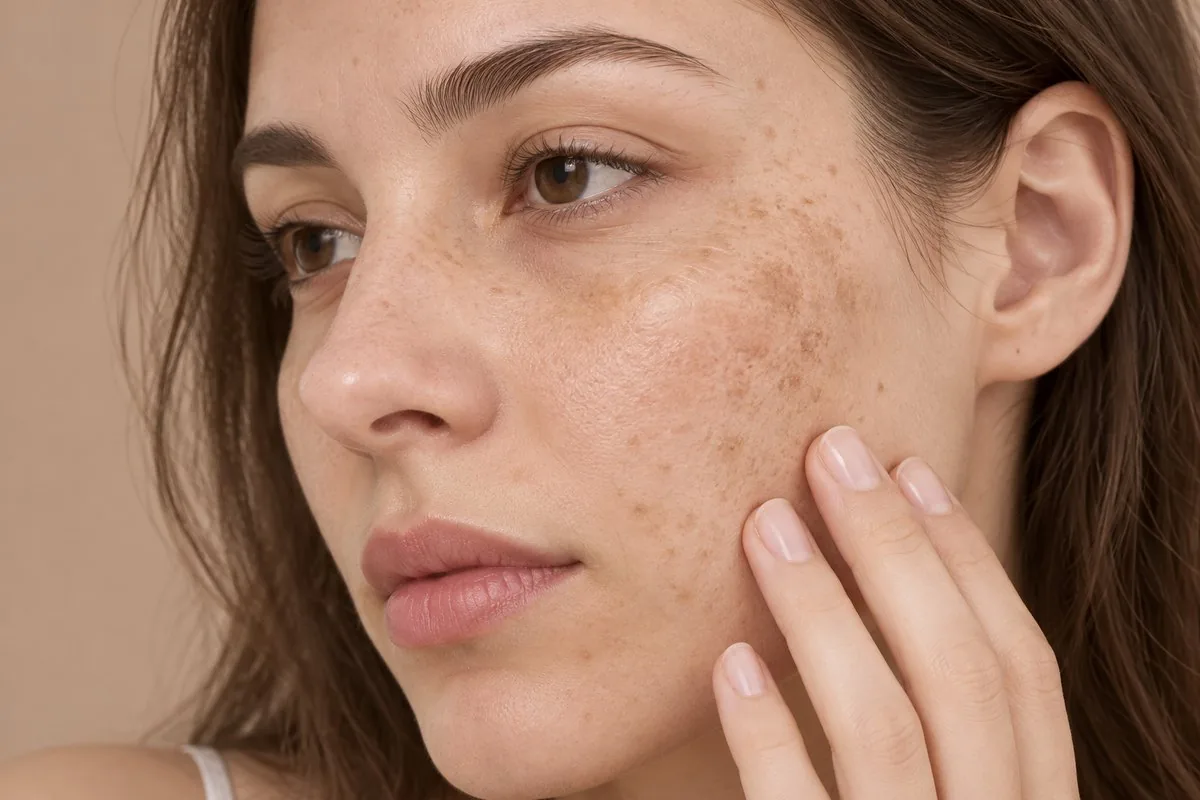
Hyperpigmentation means patches darker than the rest of your skin. In Malaysia, the usual causes are year-round sun, marks left by pimples, and hormones. Medium and darker skin tones react to these triggers more easily, as the American Academy of Dermatology explains.
This guide is written by BeauLife Clinic, an MOH-registered aesthetic clinic (KKLIU 1970/2019) with LCP-certified doctors, treating skin since 2017 at five Klang Valley branches: Bukit Jalil, Cheras, Puchong, Subang Jaya and Ampang. It covers the types of dark patches, sun protection, creams and the clinic treatments that speed up fading.
Have spots that sunscreen and serums have not shifted?
Our Discovery PICO page explains how a picosecond laser breaks up pigment with less heat than older lasers, and what a course usually costs.
See how PICO laser treats dark spotsFirst, board-certified dermatologist Dr Dray walks through the main types of dark spots and the ingredients with real evidence behind them.
Dark Spots on the Face: What Actually Works (Dermatologist Explains)
1. What is the best thing for hyperpigmentation?
Quick Answer: There is no single answer, because dark patches have different causes. The best thing for hyperpigmentation is whatever removes your trigger: treating acne, ending an irritating product, or blocking sunlight. Once the cause is controlled, many spots fade by themselves, and creams or lasers work faster and hold their result longer.
Most online lists jump straight to ingredients. The AAD starts elsewhere: remove the cause, and many spots clear on their own.
So before you buy anything, answer three questions:
- What came first? A pimple, a rash, a burn or a new product points to post-inflammatory marks. Years of sun points to sun spots.
- Is it still happening? Active acne keeps making new marks, so treat the acne first.
- How deep is the colour? Light brown usually sits near the surface. Blue-grey or very dark brown sits deeper and fades far more slowly.
A doctor can check all three in one visit. Our PICO laser for dark spots page explains why the type is named before any session.
2. Which type of hyperpigmentation do you have?
Quick Answer: Most dark patches fall into four groups: sun spots, freckles, post-inflammatory marks after acne or injury, and melasma. They differ in where they appear, how deep the pigment sits and how fast they fade. Spots a few shades darker than your skin usually fade in 6 to 12 months once the cause is gone.
| Type | Typical sign | Where pigment sits | Without treatment | First step | Options a doctor may consider |
|---|---|---|---|---|---|
| Sun-driven | |||||
| Sun spots (solar lentigines) | Flat, defined brown spots on cheeks, hands, arms | Upper skin | Stay, slowly darken with sun | Daily tinted sunscreen | Discovery PICO |
| Freckles | Small light-brown dots that darken in sun | Upper skin | Darker in sunny months | Sun protection | Discovery PICO |
| After inflammation | |||||
| Post-inflammatory marks | Flat brown or dark patch where a pimple, bite or burn healed | Usually upper; sometimes deeper | Often fade in 6 to 12 months; deep ones take years | Treat the acne or irritation | Discovery PICO, Sylfirm X, Plenhyage |
| Hormone and light-driven | |||||
| Melasma | Symmetrical patches on cheeks, forehead, upper lip | Upper and deeper | Tends to return with sun and heat | Sun and visible-light protection; doctor plan | Sylfirm X, Discovery PICO toning |
| Not a pigment problem | |||||
| Red marks after acne | Pink or red flat spots | Blood vessels, not pigment | Fade over weeks to months | Calm the skin | Sylfirm X |
Source: BeauLife Clinic, Pigmentation & Dark Spots and Melasma concern pages, with fading times from the American Academy of Dermatology, compiled November 2026. A guide, not a diagnosis. Licence.
Three things in the table are worth a second look:
- Depth decides speed. The AAD notes that colour lying deep in the skin often looks slate blue or grey and can take years to fade.
- Melasma is its own condition. It returns easily, so it needs a long-term plan. Our guide to melasma treatment covers why it comes back.
- Red is not brown. Pink marks after acne are blood vessels, and pigment creams will not touch them. Our guide to gentle facials for redness explains what calms red skin.
3. Why does sunscreen matter so much for dark spots in Malaysia?
Quick Answer: Sunlight keeps switching pigment back on, and in Malaysia it is strong all year. Ordinary sunscreen blocks ultraviolet rays but not much visible light, which also darkens medium and dark skin. The AAD recommends a tinted sunscreen with iron oxide, SPF 30 or higher, broad-spectrum and water-resistant.
Most serum lists skip visible light. In a 2010 study by Mahmoud and colleagues, visible light caused darker and longer-lasting pigment than long-wave UVA in 20 volunteers with skin types IV to VI. It caused no pigment at all in fair skin type II. A French randomised trial tested a sunscreen that blocks visible light as well as UV for keeping melasma from returning.
| Protection | UVB (burning) | UVA (tanning, ageing) | Visible light (darkens medium and dark skin) |
|---|---|---|---|
| Sunscreen | |||
| SPF only, not broad-spectrum | Blocks | Partly | Little |
| Broad-spectrum SPF 30+, untinted | Blocks | Blocks | Little |
| Broad-spectrum SPF 30+, tinted with iron oxide | Blocks | Blocks | Blocks |
| Habits | |||
| Wide-brimmed hat and shade | Partly | Partly | Partly |
| Avoiding 10am to 2pm sun | Partly | Partly | Partly |
Source: AAD guidance on fading dark spots and Mahmoud 2010, compiled by BeauLife Clinic, November 2026. Ratings are simplified; actual protection depends on the product and how much you apply. Licence.
How to make it work in hot, humid weather:
- Check the label. Iron oxide is listed under inactive ingredients, because it guards against visible light, not UV.
- Reapply every two hours and after sweating, as the AAD advises.
4. Which creams fade dark spots, and which should you avoid?
Quick Answer: Retinoids, azelaic acid, glycolic acid, kojic acid and vitamin C can fade spots once the cause is controlled and sunscreen is in place. Results take months. Avoid unregistered whitening creams: Malaysian authorities have repeatedly banned cosmetics found to contain hydroquinone, tretinoin or mercury.
| Cream and study | Patients | Reported result (bar, scale 0 to 100%) | Caution |
|---|---|---|---|
| Retinoids | |||
| Tretinoin 0.1%, post-acne and rash marks (1993) | 54 | Marks 40% lighter vs 18% with plain cream, 40 weeks | Irritation in half of users; needs a prescription |
| Same trial, plain cream group | 30 | 18% lighter with a cream that had no active | Shows how much fades with time and care alone |
| Niacinamide vs hydroquinone | |||
| Niacinamide 4%, split-face (2011) | 27 | Good to excellent in 44%; side effects 18% | Studied in melasma, 8 weeks |
| Hydroquinone 4%, other side of face | 27 | Good to excellent in 55%; side effects 29% | Prescription only in Malaysia |
| Review of post-inflammatory marks | |||
| Retinoids across 48 studies (2024) | 1,356 in review | Partial improvement in 85% of those treated | Few cleared fully |
| Hydroquinone and peels, same review | 1,356 in review | Less effective than retinoids or laser | Small share of studies |
Source: the peer-reviewed papers linked in each row, compiled by BeauLife Clinic, November 2026. Studies used different scales and patients, so compare rows within a study, not across studies. Licence.
Two warnings matter more than any ingredient list:
- Hydroquinone is a medicine, not a cosmetic. The National Pharmaceutical Regulatory Agency (NPRA) says it should only be used under a healthcare professional, and warns that unsupervised use can cause redness, discolouration and sensitivity. A 2022 review of 126 cases linked blue-black ochronosis mostly to strengths above 4% and use beyond three months.
- Mercury still turns up. In October 2022, NPRA cancelled five cosmetic products, three for mercury and one for hydroquinone and tretinoin. Mercury can harm the kidneys and nervous system.
Check any whitening product on the NPRA website first, and use one active at a time: irritation from layering acids and retinoids makes new marks.
Not sure which type of dark spot you have?
A BeauLife doctor can check the type and depth of your pigmentation and explain whether a cream, a device or both make sense.
See how Sylfirm X treats pigment and redness5. Which clinic treatments help hyperpigmentation?
Quick Answer: At BeauLife, the doctor-led options for dark spots are Discovery PICO laser, Sylfirm X pulsed radiofrequency microneedling, the OxyGeneo facial and the Plenhyage skin booster. PICO suits defined brown spots; Sylfirm X suits pigment mixed with redness or melasma. Results build over 3 to 6 sessions.
| Treatment | What it does | Sessions | Downtime | Results seen | Typical price |
|---|---|---|---|---|---|
| Discovery PICO Picosecond laser | Breaks pigment into tiny particles the body clears | 3 to 6 | Minimal, mild redness | 2 to 4 weeks | RM 600 to 2,000+ per session |
| Sylfirm X Pulsed RF microneedling | Calms overactive pigment and vessels under the surface | 3 to 5 | 1 to 2 days of redness | 4 to 8 weeks | RM 1,800 to 3,500 per full-face session |
| OxyGeneo Device facial | Exfoliates and infuses serums for a brighter, more even look | Monthly | None | Same day | Quoted after assessment |
| Plenhyage Polynucleotide booster | Strengthens fragile skin and supports an even tone | 3 | Small bumps for a day | 3 to 4 weeks | Three sessions from about RM 2,800 |
Source: BeauLife Clinic Pigmentation & Dark Spots concern page and treatment pages (typical Klang Valley prices), November 2026. Sessions and downtime are a general guide; your doctor confirms what applies and gives the exact quote after a consultation. Licence.
How a doctor usually matches them:
- Clear-edged sun spots and freckles often respond to PICO in fewer sessions than melasma.
- Pigment with redness or melasma leans towards Sylfirm X’s pulsed wave, which avoids surface heat.
- Dull, uneven skin may start with OxyGeneo or a booster, or ASCE Exosome after a laser.
Ask for the full course price, not just one session. Lasers and devices must be used by a registered doctor at a licensed clinic, with devices regulated by the Medical Device Authority. Our guide to choosing a safe aesthetic clinic in Malaysia shows how to check.
6. Does laser work for hyperpigmentation, and can it make it worse?
Quick Answer: Yes, for many people, but with a real risk on Asian skin. In one Hong Kong study, 90% of patients saw moderate to marked fading of sun spots after picosecond laser, yet new darkening followed 10.2% of sessions. Gentle settings, spacing and strict sun care reduce that risk.
| Study and design | Patients | Reported result (bar, scale 0 to 100%) | What to keep in mind |
|---|---|---|---|
| Sun spots, picosecond 532 nm | |||
| Chan 2019, Hong Kong, up to 3 sessions | 20 | 90% moderate to marked fading at 12 weeks | Skin types III to IV |
| Same study, side effect | 137 sessions | New darkening after 10.2% of sessions | Lighter patch in 1 patient |
| Vachiramon 2018, Thailand, pico vs Q-switched | 28 | Same clearance; higher satisfaction with pico | Single session, arms |
| Post-inflammatory marks, review | |||
| Mar 2024, laser across studies | 1,356 in review | Partial improvement in 66% | Some cases darkened after laser |
| Same review, complete clearing | Subgroup | Cleared fully in 26% of a subgroup | Only laser achieved full clearing |
Source: the peer-reviewed papers linked in each row, compiled by BeauLife Clinic, November 2026. Most studies used other picosecond brands and small groups; results vary and are not a promise of outcome. Licence.
What this means before you book:
- Darkening is the main risk. It is usually temporary, but it is why doctors start gently on skin that marks easily.
- Laser is not always first. The AAD notes that flat marks after acne often fade once breakouts settle.
Our guide to laser treatment for dark spots compares the devices.
7. How do you plan a hyperpigmentation treatment from start to finish?
Quick Answer: Diagnose the type, block the trigger, give one cream a fair trial of two to three months, then add a clinic treatment for spots that remain. Keep sun protection going throughout, because hyperpigmentation can return even after it clears.
Five steps, in this order:
- Find the cause. Have a doctor confirm the type of pigmentation and whether acne, a product, hormones or sun is driving it.
- Block the trigger. Treat active acne, quit any irritating product and use a tinted iron oxide sunscreen every day.
- Add one fading cream. Use one proven active, such as a retinoid, azelaic acid or vitamin C, for at least 8 to 12 weeks.
- Treat what remains. For spots that stay, a doctor may suggest a PICO laser or Sylfirm X course, spaced to let the skin settle.
- Keep it from returning. Keep sunscreen, hat and gentle skin care going, because new spots form while the trigger is still around.
Skipping ahead is why many people feel nothing works: a laser on skin that still breaks out simply makes new marks.
Ready for a plan built around your type of spot?
Our doctors explain each step and its cost, and add a device only when it is likely to help.
See how a skin booster course supports even tone8. The short version
If you came looking for the best thing for hyperpigmentation, it is a plan, not a jar. Find the cause, block it with a tinted iron oxide sunscreen, give one proven cream a few months, and add a doctor-led PICO laser or Sylfirm X course for what remains. Skip unregistered whitening creams. The BeauLife Clinic homepage lists all our treatments and five branches.
9. Frequently Asked Questions
1. What is the best thing for hyperpigmentation?
There is no single one. The most useful step is removing the cause, such as acne, an irritating product or sunlight, and wearing a tinted sunscreen with iron oxide daily. People search for the best thing for hyperpigmentation, but the right treatment depends on the type of spot. Creams, PICO laser or Sylfirm X then speed up fading.
2. How long does hyperpigmentation take to fade?
Once the cause is controlled, a spot a few shades darker than your skin usually fades in 6 to 12 months, according to the American Academy of Dermatology. Deep, blue-grey pigment can take years. Creams and clinic treatments can shorten the time.
3. Is it safe to use hydroquinone cream in Malaysia?
Only under a doctor. In Malaysia, hydroquinone is a medicine that needs a healthcare professional’s advice. Unsupervised use can cause redness, discolouration and sensitivity. Avoid whitening creams from unknown sellers, as some have been banned for containing hydroquinone or mercury.
4. How much does pigmentation laser cost in the Klang Valley?
At BeauLife, Discovery PICO typically costs RM 600 to 2,000+ per session and Sylfirm X typically costs RM 1,800 to 3,500 per full-face session in the Klang Valley. Most plans need 3 to 6 sessions. Your exact quote follows a consultation.
Want a clear plan for your dark spots?
WhatsApp us on +6016-251 7687. A BeauLife doctor will check your pigmentation and give the full price before anything starts. We open 10am–7pm on weekdays and 10am–5pm on weekends.
Book a pigmentation consultation